
Choosing cord for production purposes should start with understanding its function in the finished product. Once the intended application is clear, you can consider the material, cord construction, size, and color that best suit your requirements.
For companies purchasing cord to process into finished products, clear specifications can help design, procurement, and production teams work from the same requirements.
1. Start with the Product Application
First, determine how the cord will be used. For example, paper bag cords and ID card lanyards are cord applications made using the Needle-Knitted PP construction method. Meanwhile, hoodie drawstrings, trouser waist cords, and bag drawstrings use the Non-Filled Polyester Braided construction method.
If the cord is intended for another application, prepare product photos, physical samples, or an explanation of the cord’s intended function. This information helps make discussions more focused, allowing specifications to be tailored to your requirements without assuming that every cord type is suitable for every application.
2. Understand the Available Materials and Constructions
Mukti Djaya Talikur uses three main materials in its production: PP (Polypropylene), POY (Partially Oriented Yarn), and Polyester. Each material is used for a different cord construction.
- PP: Used for needle-knitted construction, with 46 color options.
- POY: Used for needle-knitted construction, available in white only.
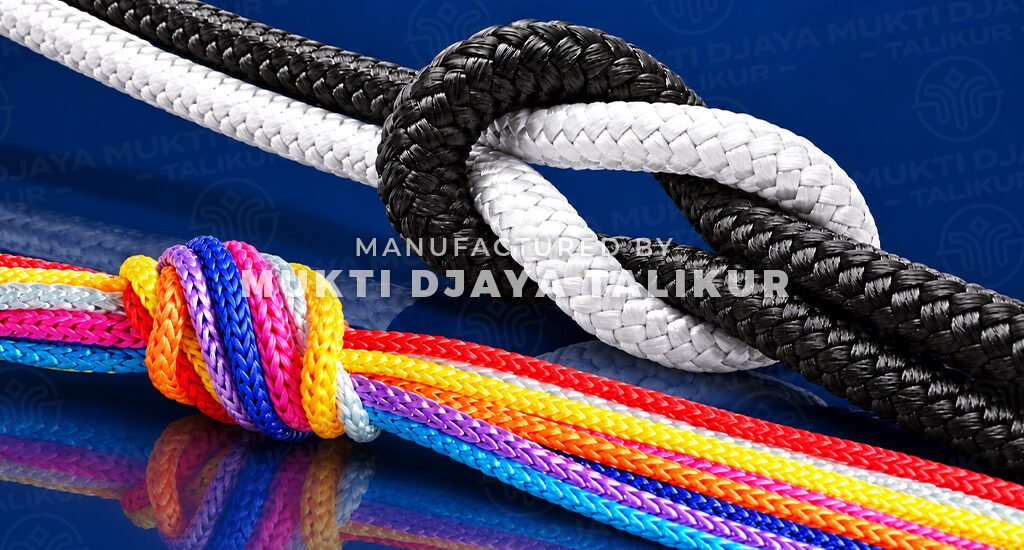
- Polyester: Used for braided construction, with color options depending on the product type. Black and white are available for the Non-Filled type, while white is available for the filled type, using either fabric filling or fabric and needle-knitted cord filling.
Choosing cord involves more than simply selecting a material by name. You also need to consider its construction, size, color, and intended product application.
To learn more about the characteristics of each material, read our article “Differences Between PP, POY, and Polyester Cord Materials”.
3. Determine the Required Size and Color
Cord size and color options may vary depending on the product type and construction. Therefore, make sure to confirm the required specifications beforehand.
If color is an important part of your product design, use a clear color reference. If your company has an internal color standard or a sample for reference, use it to help ensure the selected color meets your requirements. Avoid relying solely on color names, especially when color accuracy is an important product requirement.
4. Check Compatibility with the Finished Product
Before finalizing the specifications, make sure the cord is suitable for the design and intended use of the finished product. If necessary, use a sample to check its compatibility directly with the product you plan to manufacture.
If the product has specific technical requirements, determine the appropriate tests to verify them. The cord’s appearance and size alone are not enough to confirm its load-bearing capacity or compliance with other technical requirements.
5. Prepare a Summary of Your Requirements Before Contacting a Cord Manufacturer
To make communication with a cord manufacturer more efficient, prepare the following information:
- Intended application or name of the finished product.
- Preferred material or cord construction, if already known.
- Required cord size.
- Required color or color reference.
- Estimated order quantity.
- Product photos, design drawings, or physical samples, if available.
This information helps the manufacturer understand your requirements and identify relevant product options. Product availability should still be confirmed based on the required specifications.
Conclusion
Choosing cord for production starts with understanding its function in the finished product, followed by considering the material, construction, size, color, and compatibility with the product requirements. The clearer your specifications, the easier it is for the manufacturer to provide relevant options.
Mukti Djaya Talikur offers cord products with various material, construction, size, and color specifications for a wide range of product applications. Share your intended application and specifications to learn more about the available product options.